
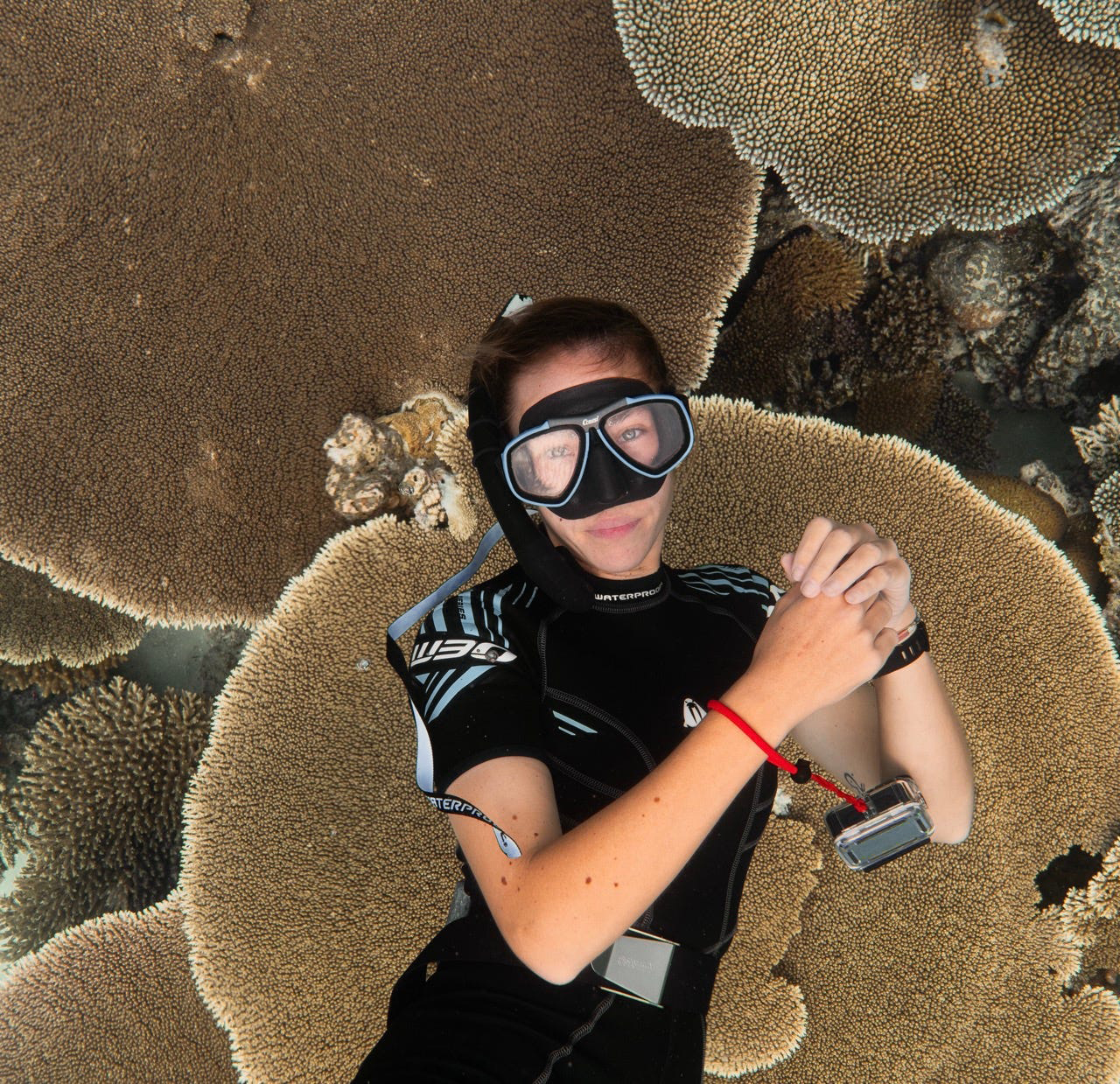
“As a tropical reef ecologist, I spend thousands of hours immersed in coral reefs around the world. Brightly coloured stony corals, delicate sea fans and soft corals have become familiar companions over the years, but beyond the sunlit edges of the reefs I usually study, lies a stranger world. It is here that black corals first captured my attention.”
Jess Hodge researches coral reef recovery and soundscape ecology at the University of Bristol. Here is her insightful memo on what black coral can teach us.
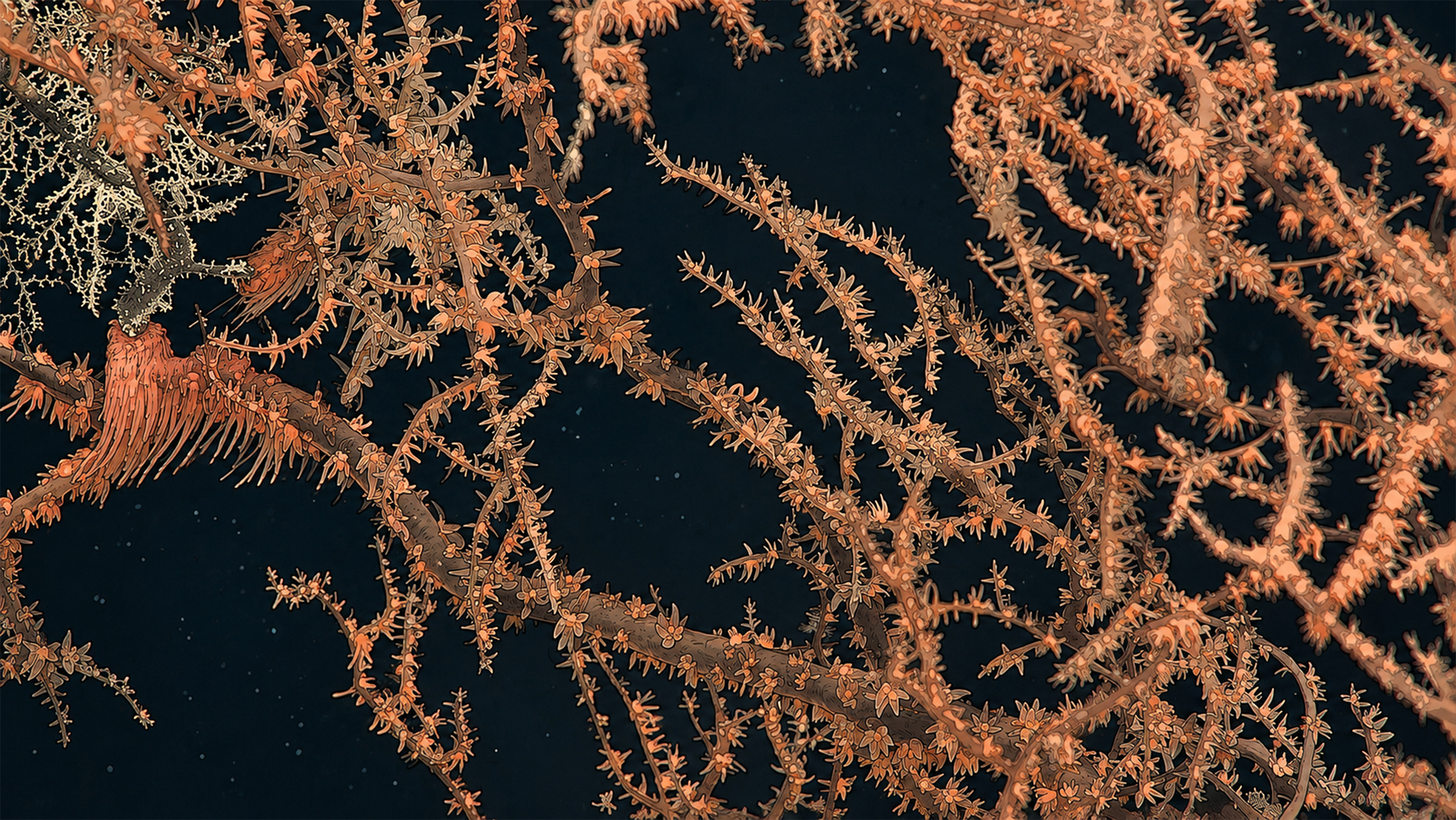
Known scientifically as Antipatharia, they unfurl from the seafloor in curling spirals and intricate branches, resembling underwater orchards suspended in the dark. Despite their name, black corals are rarely black at all.
Living colonies glow in shades of orange, pink, yellow and ivory. Their colour stems from the tiny animals that build the colony: coral polyps. Like the better-known reef-building corals, black corals are not individuals but communities, consisting of hundreds of filter-feeding animals that work together to create something much larger than themselves.
While stony corals build pale limestone skeletons, black corals construct skeletons from chitin, the same material found in insect shells. Hidden beneath their vibrant exterior is a dark, obsidian-like framework that lends them their name.
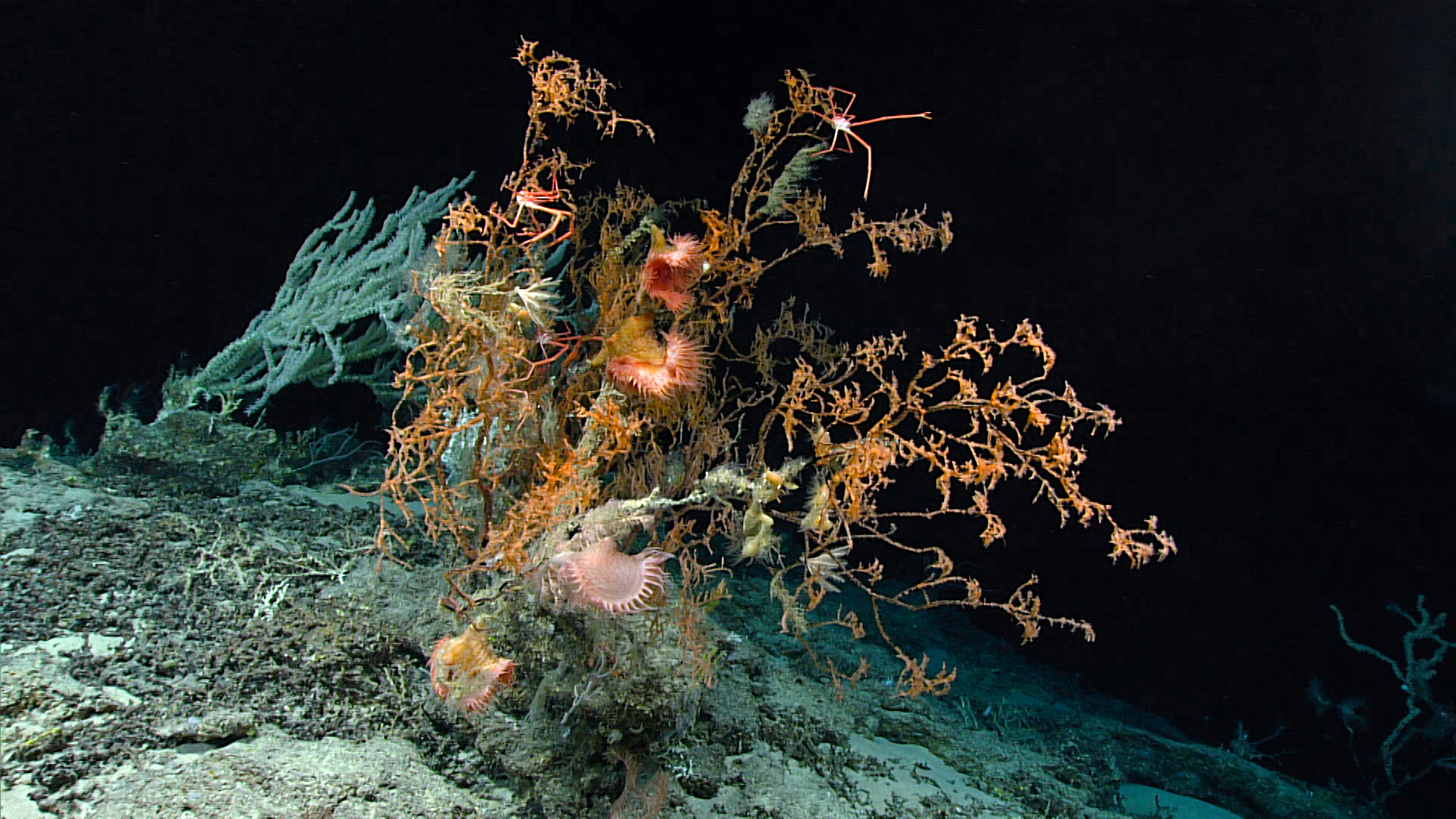
Black corals are astonishingly widespread, stretching from shallow tropical reefs to abyssal depths approaching 8,000 metres. In these deep-sea landscapes, where life can appear sparse and scattered, they become architects of complexity.
Much like ancient trees in a forest, their branching forms create shelter, structure and an oasis.
They transform space into habitat, supporting diverse communities of fish, crustaceans, molluscs and countless other invertebrates. Wherever black corals grow, life gathers around them.
The deeper you descend into the ocean, the more demanding existence becomes. Sunlight fades to darkness, temperatures plummet, and pressure steadily mounts. In response, many deep-sea organisms adopt a slower rhythm of life, conserving energy in an environment where little can be wasted.
Take the Greenland shark. Thought to be the slowest-moving shark in the world, it is also among the longest-lived vertebrates, surviving for centuries.
Black corals share this same relationship with time.
Some species grow by only eight to 22 micrometres each year. At that pace, it can take a decade to add the thickness of a single human hair. Their growth is almost imperceptible, but their longevity is anything but.
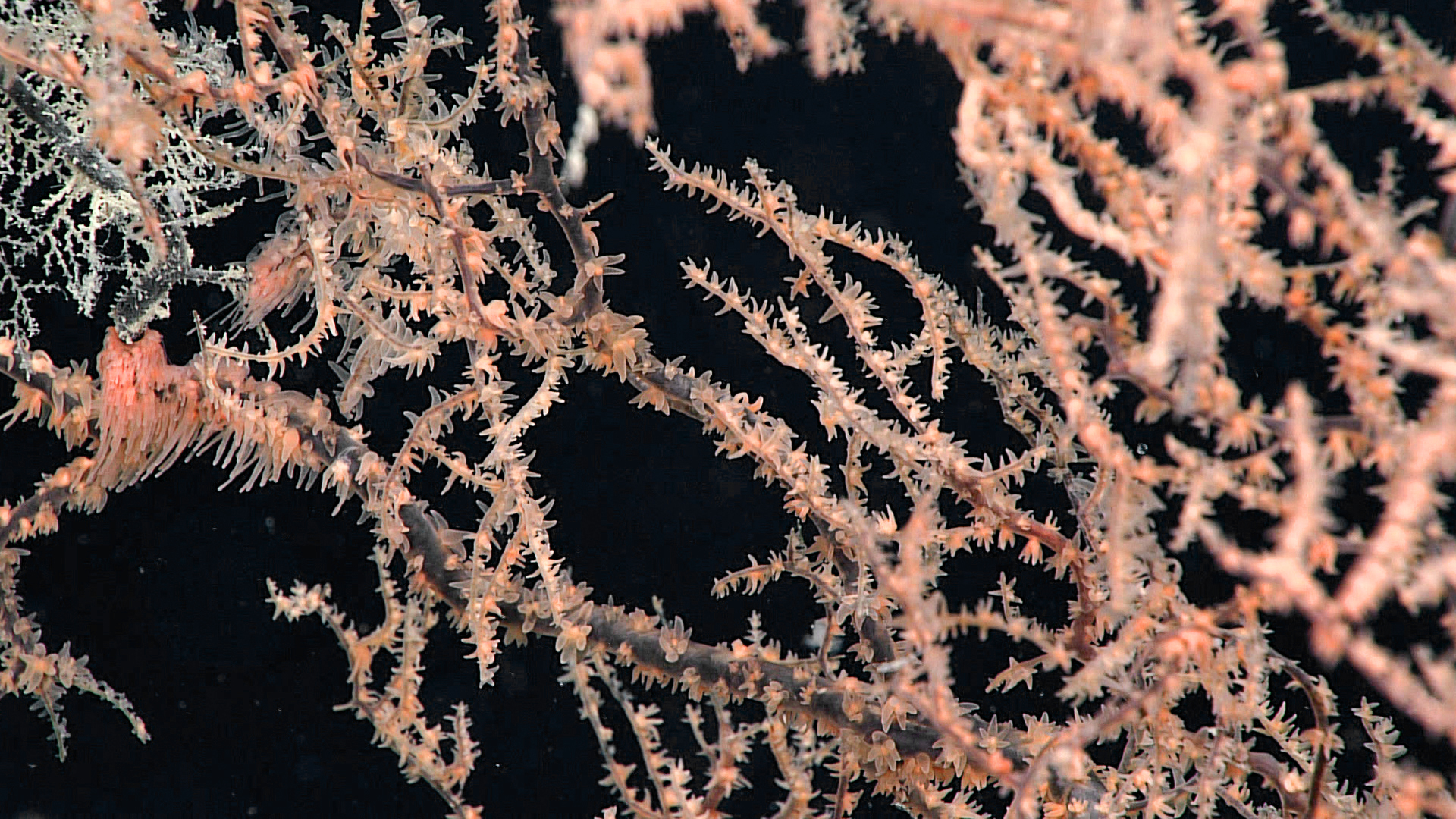
Using metrics such as growth rings, like those found in trees, alongside radiocarbon dating, scientists have estimated some colonies to be more than 4,000 years old. One specimen is thought to have begun life around 2239 BC, when pyramid building was flourishing in Ancient Egypt. While civilisations rose and fell, black coral simply continued growing.
Yet the story behind this organism is not only scientific. Long before researchers began ageing black corals or mapping their role in deep-sea ecosystems, indigenous peoples and coastal communities were already recognising their significance.
In Hawai‘i, black coral has long been used in medicinal and cultural practices, often harvested with great care and respect. Along parts of the Red Sea, it has inspired both reverence and caution, finding its way into prayer beads and local traditions.
Even the scientific name Antipatharia traces back to the Greek anti pathos — “against suffering;” — reflecting centuries-old beliefs in its protective qualities. Today, this cultural knowledge sits alongside a growing scientific appreciation for what black corals can teach us.
Growing more slowly than a human hair thickens and living for millennia, they reveal an ocean governed by a different clock. Their colonies quietly build habitat for generations of marine life, asking for little attention and demanding no urgency.
Remarkably, their story is not one of speed, but of endurance.
As we venture further into the deep ocean, black corals offer a gentle corrective to our modern obsession with the fast-paced way of life. They remind us that some of the most important things in nature are built slowly, that resilience often appears unremarkable in the moment, and that longevity is rarely dramatic.
Protecting these environments requires the same mindset. Long-term stewardship, patience and care. By learning from these ancient animals — and from the communities that have valued them for generations — we may develop a deeper appreciation for the timescales on which nature operates. Perhaps that is why black coral feels such a fitting emblem for Black Coral Club. Not because it grows quickly, but because it endures.